

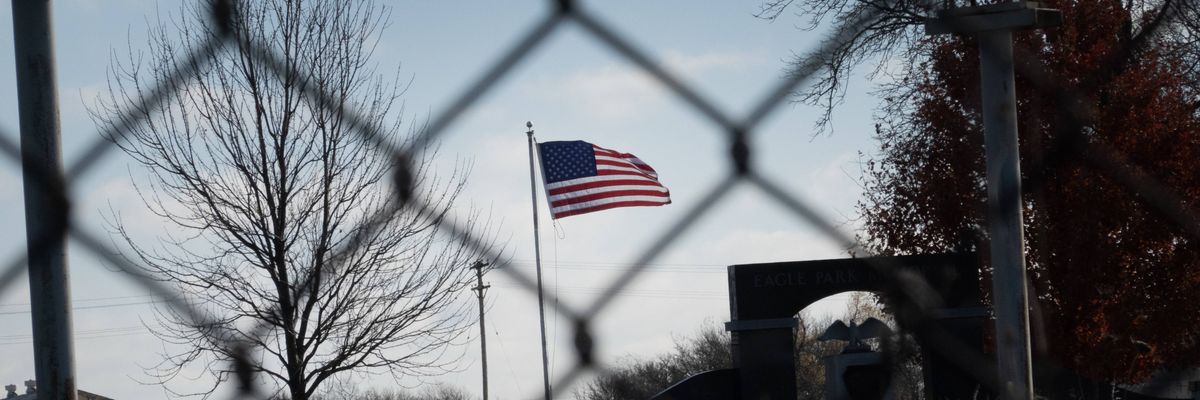
The plume of toxic dust from the US Army’s detonation of lead-based explosives on Wednesday in Iowa could expand further than previously projected.
The Army published updated maps Tuesday morning showing that the toxic cloud could reach all the way to northern Missouri, 100-110 miles from ground zero, within eight hours of the explosion at the Iowa Army Ammunition Plant in Middletown.
Despite urgent calls for a delay by environmental groups and lawmakers in both parties, the explosion is scheduled to take place at 9:00 am Central Standard Time on Wednesday, November 25, the day before Thanksgiving, after a federal appeals court lifted a temporary block on the Environmental Protection Agency’s (EPA) permit.
The Department of Health and Human Services warned pregnant women and children under 6 to evacuate the projected affected area, citing their heightened vulnerability to lead exposure, which can irreversibly damage developing brains and nervous systems and increase the risk of miscarriage, premature birth, and developmental disabilities.
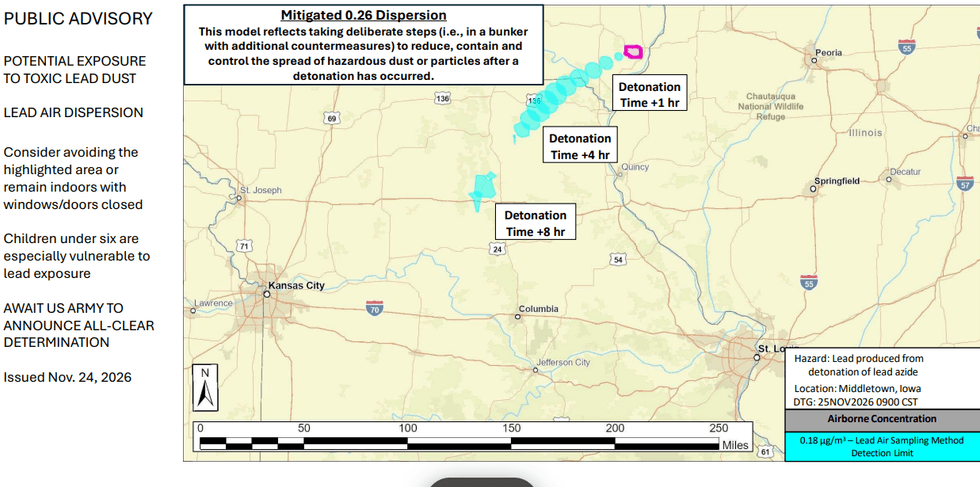 An updated public advisory from the US Army on November 24, 2026, warns residents to avoid an area stretching from southeastern Iowa to northern Missouri that it projects will be affected by the detonation of nearly 10,000 pounds of degraded lead azide at the Iowa Army Ammunition Plant in Middletown, Iowa. (Image by US Army)
At a press conference on Tuesday, the Army sought to quell rising public fear about the explosion.
EPA Associate Administrator Tom Croci said the agency had “created a blanket of sampling teams and testing teams that… will be there during detonation with air monitoring systems and then after detonation to all of the places within the affected area that need to be sampled.”
“We don’t believe that the public should be in a panic,” said acting Army Secretary Adam Telle. “We are very calm about this. We understand it to the best of our ability.”
Why wasn’t this all in place before the planned detonation last Friday, and only happened after the public raised concern?
— Joseph Allen (@j_g_allen) November 24, 2026
While the Army has described a controlled detonation of the materials as safer than risking an accidental explosion, Nicole Cantello, president of the Chicago-based American Federation of Government Employees (AFGE) Local 704, which represents about 1,000 EPA employees in six Midwestern states, said it should be “delayed until more protective alternatives can be fully evaluated.”
Cantello pointed to the “disclosure of safer alternatives” by the Army, which was reported by The New York Times over the weekend. In March, the Army hired the Georgia-based firm MuniRem to chemically dissolve the lead azide, then canceled its contract two months later.
The Army said it canceled the contract because it would require opening the drums, which could cause the unstable materials inside to detonate accidentally.
MuniRem’s founder, Valentine Nzengung, has questioned this rationale. In an interview with the Des Moines Register Monday, he explained that he’d personally opened drums of unstable lead azide and neutralized their contents safely. He said the government provided little explanation for why it believed detonation was a safer option.
Though he acknowledged that opening the drums was the most dangerous step of the process, he said that “overall, detonation of stored lead azide under these conditions would likely result in extensive long-term environmental contamination requiring costly remediation and monitoring of air, soil, surface water, groundwater, and debris for many years or decades."
“I wish they would just take some time,” Nzengung said of the Army. “There is just so much rush. I wish everybody would take a deep breath so, at the end of the day, we do the right thing and protect humans and our environment."
“It doesn’t have to be the technology of my company that is used," he added. "I’m just saying, let science drive the decisions being made.”
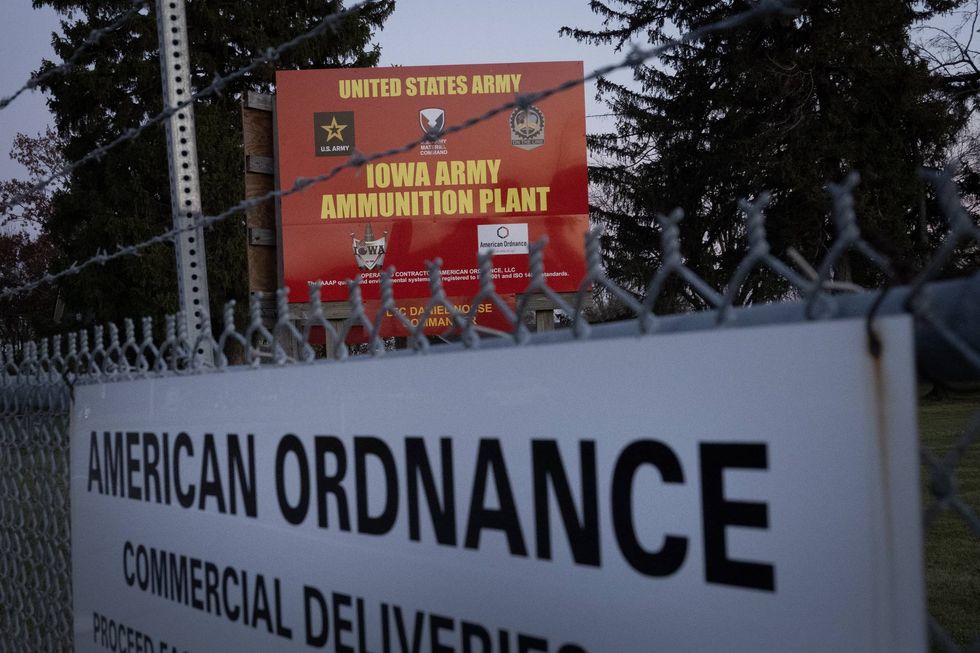 A sign identifying the facility sits inside a fence surrounding the Iowa Army Ammunition Plant on November 19, 2026, in Middletown, Iowa. (Photo by Scott Olson/Getty Images)
In a lawsuit, the Iowa Environmental Council and Sierra Club argued that the Army’s reasoning for rejecting alternative treatments of the lead azide “is unsupported by any publicly available documents” and accused the Army of moving forward with a potentially harmful detonation “without fully considering alternatives.” The 8th Circuit denied their request for an emergency stay Monday.
“It is my opinion that the [Army’s environmental assessment] has hastily rejected the option of chemical neutralization," said Ranajit Sahu, a mechanical engineer and environmental consultant in a declaration supporting the environmental groups’ legal challenge.
He also drew attention to the fact that the Army first solicited a contract regarding lead azide neutralization at the same Iowa facility as far back as September 2025, more than six months before it supposedly discovered the dangerous chemicals.
“This raises questions about when the Army knew of the problem,” Sahu said.
We urge that the planned detonation of hazardous lead azide be delayed until more protective alternatives can be fully evaluated and the most protective solution implemented to protect the public health of the people of the Midwest.
— AFGE Local 704 (@704afge) November 24, 2026
Cantello said the Army should delay the detonation, “until… the most protective solution [can be] implemented to protect the public health of the people of the Midwest.”
“At a time when Congress is considering rolling back permitting procedures that protect the American people, this proposed release of toxic airborne pollutants brings into sharp relief the dangers of imposing risky solutions prior to full evaluation by the public,” she added. “We need not default to the Army’s century-old practice of open-air detonation when a more protective solution may be available. We urge EPA to work with the Army to explore an alternative that protects public health and disposes of a highly toxic poison.”
From Common Dreams via This RSS Feed.
I like how part of their reasoning is “we will have a bunch of sampling teams”. So what, you blow the thing up and then the sampling teams tells you the levels are to high and spread too far. The citizens are just get to know how screwed they are then huh. I’m sure you aren’t paying for their relocation or health damages… The US is a clown show
Jesus Christ this is like Saturday morning Batman villain cartoony shit why the hell is this even happening
Caus there’s not a lot of smart people who join the military, and as of recently there’s a lot fewer.
