
- 68 Posts
- 164 Comments

 2·3 个月前
This video is more like boy then boy boy but there is a replacement boy for the boy who didn’t go.
More seriously: the endurance and resolve of the Cuban people in the face of this monstrous act of war against them is incredible.

I don’t really believe an Injunction can stop a war, but I’d love to be proven wrong.
What would a lawsuit even do? Would it jail him? Probably not. Are they going to fine him? Even if they did that it would be negligible.
For those playing at home: it was Zyklon B.
May a thousand DSA primary campaigns bloom!

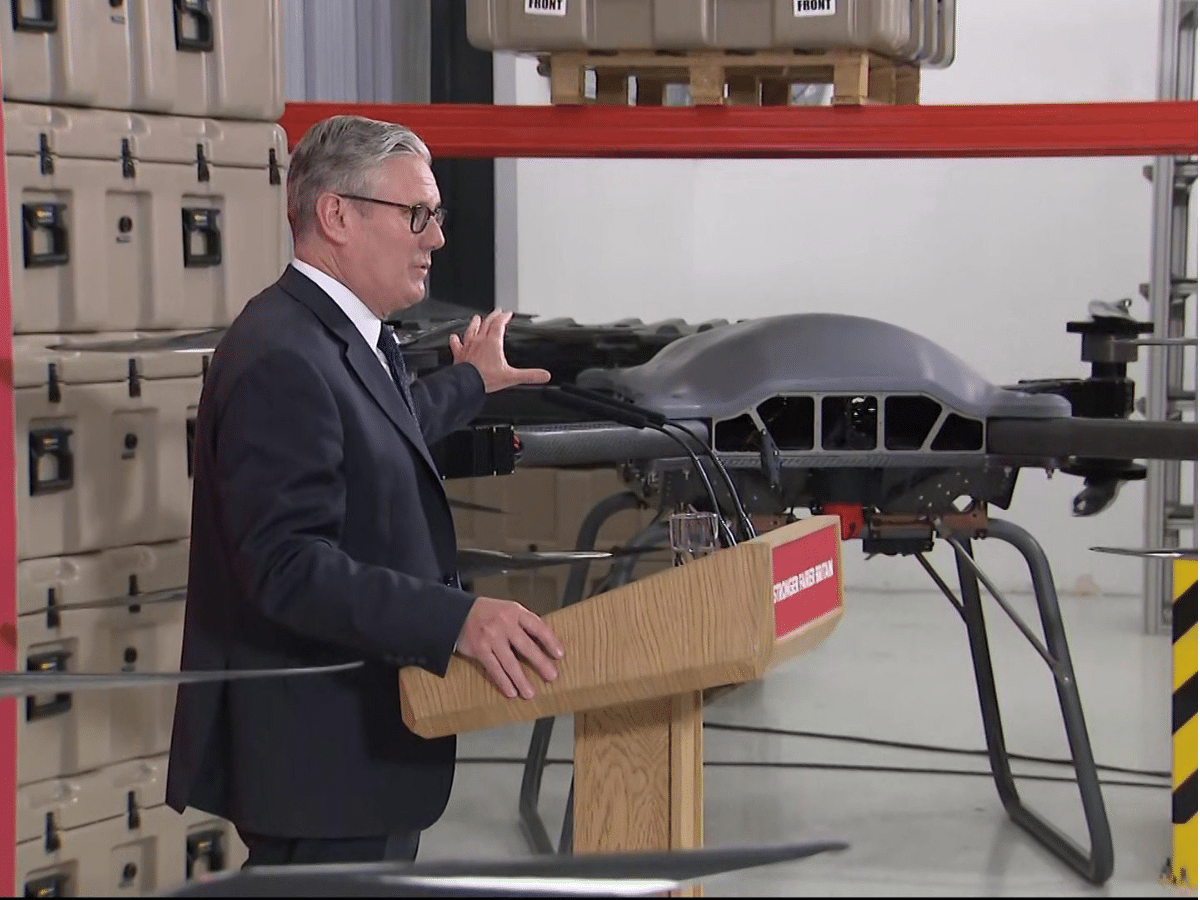



Like the Latam community, these publications publish mostly UK news and some international news. Since most of the content is UK focused, they’ve been moved.
This has so little to do with Epstein. If you think the people in charge are afraid of their secrets getting out, and that’s why they’re “in line” you’re drifting away from reality. Israel has always been the unsinkable aircraft carrier in the Middle East. They are the enforcer of western policy in the region. The petrodollar runs the western worlds’ economy, and they know that they hold the keys to keeping it stable. Look at what they’ve been able to do by dragging the US into a war with Iran. They’ve set up the west’s economy on a razors edge, and are not effectively holding it ransom.
That’s an interesting idea. I wonder if that’s the case. It would be pretty easy to implement. Let me roll it around in my head for a bit. I might make a thread to get users opinion on the idea too.
Is it that “new math” everyone keeps telling me about?
 4·6 个月前
Thanks for the heads-up. I’ve updated the story with the body text from the site.

Yeah, it’s not about mining at all. Somalia doesn’t have major US mining ops, but it’s strategically crucial for three big reasons:
-
Somalia controls the Bab el-Mandeb Strait, where 10% of global trade passes (Al Jazeera, Feb 2026). Keeping that sea lane open (and under US influence) is a top priority for the Pentagon.
-
Camp Lemonnier in Djibouti is the only permanent US military base in Africa (Manara Magazine, July 2025). Having an unstable Somalia next door justifies keeping that base open and lets the US monitor rivals like China (which has its own base in Djibouti) and Turkey (which just built a naval base in Mogadishu) (ISSF, Nov 2025).
-
Turkey discovered about 20 billion barrels of oil there last year (Somali Guardian, May 2025). The US wants to make sure rivals don’t lock down those resources and that any future development happens under a US‑friendly security umbrella.
The “counterterrorism” justification (al‑Shabaab/ISIS) is the public face, they’ve already hit Somalia 47 times this year, on track to break last year’s record of 124 strikes per the above article. The administration now frames the groups as a potential “homeland threat” to justify the escalation (CTC Sentinel, July 2025). But the real drivers are securing that vital choke point, maintaining the base, and checking China/Turkey/UAE influence in the Horn.
Sudan’s different because the RSF is backed by UAE/Saudi, who are US allies. The US isn’t going to bomb its partners’ proxies. Religion isn’t the deciding factor; it’s who’s aligned with whom in the regional power game.
-
Hezbollah’s been hitting back with a mix of rockets, drones, and artillery, mostly targeting northern Israeli communities and troops. Here are some specifics from the last few days:
-
Rocket attacks: On March 22, Hezbollah fired a rocket barrage at the northern Israeli community of Misgav Am, killing one person (Al Jazeera). That same day, they launched 85 attack waves, the highest single-day total since the conflict began, with the majority being rockets/missiles (Alma Research).
-
Drone (UAV) strikes: In those same 85 waves, 18 were carried out with offensive drones. They’ve also used anti-aircraft missiles against Israeli drones (Alma Research).
-
Targets and tactics: Their operations are focused on Israeli military gatherings, armored vehicles, and bases along the border, as well as towns in the Galilee. On the ground, they’re using anti-tank guided munitions and artillery to resist Israeli advances into southern Lebanon (The Guardian).
-
Scale: Since the latest round of fighting began on March 2, over 865 attack waves have been recorded, showing they’re prepared for a sustained conflict (Alma Research).
So, beyond the general statement in the article, the retaliation has involved specific, daily attacks with a variety of weapons, causing casualties and keeping pressure on Israel’s northern border.
-
You should watch the video.
This man is a demon, it is true, but you can do better than using a misogynistic slur, come on now.
Serious purity testing here. What he actually says:
I’m transphobic!
This all seems very reasonable and fine. I’d vote for him.







Na, the commanding heights of the economy should be left to the anarchy of the free market! Clearly only good things can come from this. /s