

6·
24 hours agoWordle 1,941 3/6
⬛🟩⬛⬛⬛
⬛🟨⬛🟩⬛
🟩🟩🟩🟩🟩
Wordle 1,941 3/6
⬛🟩⬛⬛⬛
⬛🟨⬛🟩⬛
🟩🟩🟩🟩🟩
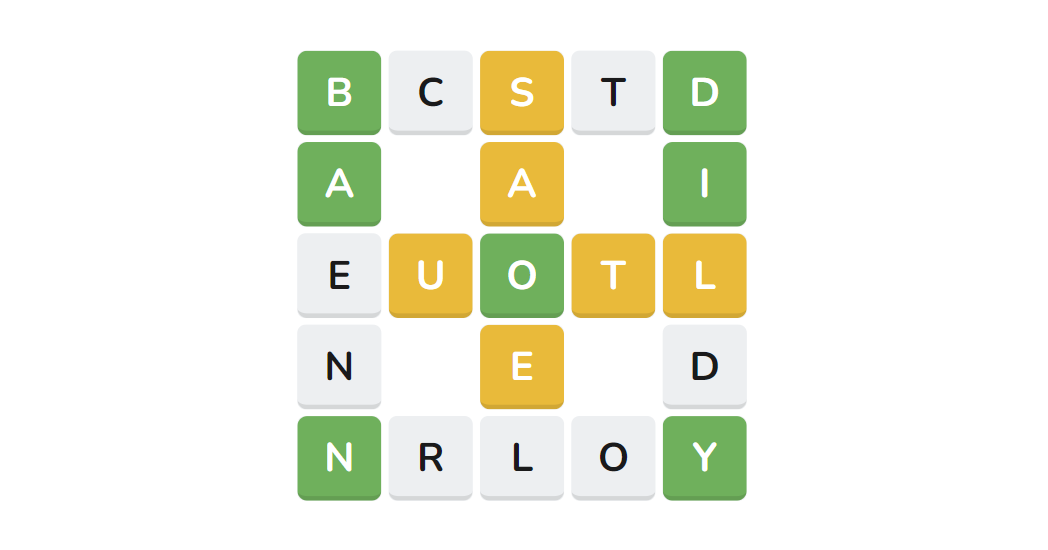
Wordle 1,939 4/6
⬛⬛⬛⬛⬛
⬛⬛🟨⬛⬛
⬛🟩🟩⬛🟩
🟩🟩🟩🟩🟩
Wordle 1,938 4/6
🟨⬛⬛⬛⬛
🟨🟨⬛⬛⬛
🟩🟩⬛🟩🟩
🟩🟩🟩🟩🟩

Wordle 1,937 5/6
⬛⬛⬛🟩⬛
🟨⬛⬛🟨🟨
🟩🟩⬛🟩🟨
🟩🟩🟩🟩⬛
🟩🟩🟩🟩🟩

I watched it yesterday and interesting is the appropriate word. The interviewee is a young guy, 28, which Jon brought up at the start of their talk. Jacob just shrugged his shoulders. After watching Jon for so many years, I thought it was an oddly unprofessional start, and since Jacob didn’t take the bait, it fell flat.
The interview goes on, with Jon poking the well-known, glaring holes in the AI debate, with Jacob nodding along. It seems like they agree. Then Jon mentions the future ramifications of AI. Jacob disagrees, starts repeating the utopian rhetoric. Jon picks at him to get some inroads into a debate. Jacob agrees, not giving up his position of a utopian outcome, but always circling back to the probable dangers.
I like that Jacob was on and that Jon did the interview. This was a tough one, because Jacob exists in a different world than Jon, and as much as he tried, he could not pull Jacob out of it.
Jacob understands there is great danger in the way AI is being developed. He has enough sense to know his employers were reckless and possibly homicidal. What he doesn’t understand is that this technology isn’t inevitable. He’s seen the back end, he understands the leaps and bounds LLMs have made, but he didn’t live through the “inevitably” of nuclear war, the “inevitably” of every computer going dark on Y2K. Even video calls were seen as the future norm in Sci-fi movies, but with all this capability, we’d rather text.
I like that they gave the interview time to breathe. It might not have been the most engaging TV, but I appreciated its awkwardness. Jacob is a tech-bro. We don’t often get a journalist on Jon’s level to give him the what-for. Watch it while you can.

Wordle 1,935 4/6
⬛🟨🟨⬛⬛
⬛⬛⬛⬛⬛
⬛🟩⬛🟩🟩
🟩🟩🟩🟩🟩
Wordle 1,934 4/6
🟨⬛⬛⬛⬛
⬛🟩⬛⬛⬛
🟨🟩🟨⬛🟨
🟩🟩🟩🟩🟩

I love this painting. It’s beautiful, it’s interesting, it’s ahead of its time, but I think most modern criticism misses a key point. It is a work of satire.
The model stands with a cloth lazily draped over her and surrounded by a seemingly random assortment of props. Sure, it may be allegorical, but I think the point is to show “how the sausage is made.” When you are setting up a scene, it just has to be beautiful and interesting. This is often how it’s done, with lots of clothespins and tape and whatever it takes to make the frame.
The satire is the painter himself, in what would have been a very posh, very dandy outfit for the day. Certainly that outfit would not be something you would paint in. And Vermeer, with the mastery of perspective, leads the eye first to the model, then to the painter, then to take in the scene as a whole. He paints the model in the scene as she probably would’ve looked, then paints this ridiculously fancy painter in the best light possible. He wants to show that the artist is curating the truth.
I think this is why he never sold the painting. It was his commentary on his profession and probably gave him comfort. At the end of the day, he knew there was an absurdity to the value placed on his art and painting’s role in history.

From the article: “There are recent signs that the gradual decline in church attendance has leveled off. For the first time in 25 years, the number of people attending in-person worship in the US has increased.”
The article also says that about 100 million people (30%) attend a weekly service in the US nowadays. They talk about the heyday of the mid 20th century where 50% of Americans attended a weekly service. The population of the US in 1950 was 150 million. So that’s 25 million more people attending church today.
So why are all the smaller churches closing? The article (and possibly the PBS doc) fails to place some of the blame on the congregation capture of mega churches and how politics has driven people into these behemoths. I know that is what’s happening where I live in the South. They have a large sanctuary and expand that with an enormous online presence. How else can we have more Church goers and less churches?
Smaller churches with smaller congregations provide necessary support and community for people. Mega churches are money machines with political agendas. The documentary wants me to mourn the loss of community, fine, but it’s the Christians that are doing it to themselves. I’m not shedding any tears.

From the article: “There are recent signs that the gradual decline in church attendance has leveled off. For the first time in 25 years, the number of people attending in-person worship in the US has increased.”
The article also says that about 100 million people (30%) attend a weekly service in the US nowadays. They talk about the heyday of the mid 20th century where 50% of Americans attended a weekly service. The population of the US in 1950 was 150 million. So that’s 25 million more people attending church today.
So why are all the smaller churches closing? The article (and possibly the PBS doc) fails to place some of the blame on the congregation capture of mega churches and how politics has driven people into these behemoths. I know that is what’s happening where I live in the South. They have a large sanctuary and expand that with an enormous online presence. How else can we have more Church goers and less churches?

UHF. “No more Mister passive resistance!”

For your interest in cultural history, I think that Budapest would win, as it has been a crossroads for centuries. For environmental studies, Iceland would win hands down. They are global leaders in that field.
Something that has not been mentioned yet is that Budapest is rather large, with a metropolitan population of over 2 million. The entire country of Iceland has under 400K people. Iceland is remote and feels remote. To me, that’s perfect. Your results may vary.
Wordle 1,931 4/6
🟨⬛🟩🟨⬛
🟨⬛🟩🟩⬛
⬛⬛🟩🟩🟨
🟩🟩🟩🟩🟩
Wordle 1,930 5/6
⬛⬛🟨⬛⬛
🟩⬛⬛⬛🟨
🟩🟩⬛⬛⬛
🟩🟩⬛🟨🟩
🟩🟩🟩🟩🟩
Wordle 1,929 4/6
⬛⬛🟨🟩⬛
🟩⬛⬛⬛⬛
🟩🟩⬛🟩⬛
🟩🟩🟩🟩🟩

Did Shit know the whole time or only when the big graphic came up behind him? He sure didn’t want that card to come back out after he looked at it. Stupid.
Wordle 1,928 4/6
🟨⬛⬛⬛⬛
⬛⬛🟩🟨⬛
🟩🟨🟩🟨⬛
🟩🟩🟩🟩🟩

It sounds like by “quality” you are talking about the physical fragility of the CD. True, a more modern format might be nice, with a bump to 24 bit depth. I would want something a little more collectible than a thumb drive though.
I say this as an avid CD buyer who rips full quality to a Plex server. Also download from Bandcamp.

“After Zelenskyy revealed the transfer in his UN speech, Lee said on X that Ukraine had broken a “non-disclosure agreement” and that this was regrettable. Zelenskyy’s adviser Dmytro Lytvyn responded on Facebook that there had been no such agreement, prompting accusations from Lee’s critics that the president, whose approval rating has hit a low of 37.9%, had lied.”
So this is an international beef playing out on socials. Great.

I’m using Boost and I was getting a lot of 404 errors, not able to access anything. I don’t have any answers for you, but was experiencing outages.