Obviously the collapse process is not uniform in space and time, and boundary conditions can accelerate or delay it, in a given compartment.
For instance, the apparent goal of the proxy conflict is to destabilize and weaken Russia, damage relationships of the EU core countries with Russia and China (and Iran, North Korea, Venezuela, etc.), extract resources (weapons purchases, attracting industry and talent, etc.) from EU countries to delay collapse of the US heartland. The current EU leadership is acting as compradors in this game, to the great disadvantage of its constituents.
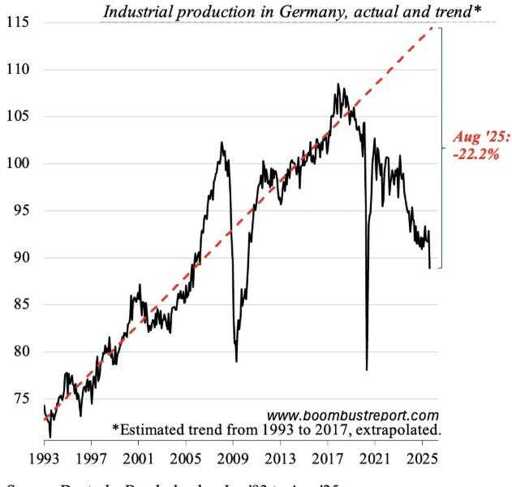
As such policies which disrupt (self-sanctions, blowing up of gas pipelines, tankers and oil processing plants) or redispatch (e.g. US selling to EU liquified Russian gas at a premium) energy and essential material flows make local industries non-competitive to US and Asia, and cause accelerated deindustrialization.
In a game “the last man standing wins” that’s an obvious disadvantage. But in the end, all of them will go down, eventually.
There is a YouTube video here that has an interesting thought about how the role of the state works. [Starts at 9 min]
Basically the state taxes and invests in “whatever” and these investments actually make it easier for individuals to get resources for the economy, so growth is faster than otherwise.
But then it causes a faster rate of collapse, than otherwise, also.
It is interesting to think about how elites can “cash out” (for themselves) by brokering the deals and arranging who gets a place at the money trough.


Obviously the collapse process is not uniform in space and time, and boundary conditions can accelerate or delay it, in a given compartment.
For instance, the apparent goal of the proxy conflict is to destabilize and weaken Russia, damage relationships of the EU core countries with Russia and China (and Iran, North Korea, Venezuela, etc.), extract resources (weapons purchases, attracting industry and talent, etc.) from EU countries to delay collapse of the US heartland. The current EU leadership is acting as compradors in this game, to the great disadvantage of its constituents.
As such policies which disrupt (self-sanctions, blowing up of gas pipelines, tankers and oil processing plants) or redispatch (e.g. US selling to EU liquified Russian gas at a premium) energy and essential material flows make local industries non-competitive to US and Asia, and cause accelerated deindustrialization.
In a game “the last man standing wins” that’s an obvious disadvantage. But in the end, all of them will go down, eventually.
There is a YouTube video here that has an interesting thought about how the role of the state works. [Starts at 9 min]
Basically the state taxes and invests in “whatever” and these investments actually make it easier for individuals to get resources for the economy, so growth is faster than otherwise.
But then it causes a faster rate of collapse, than otherwise, also.
It is interesting to think about how elites can “cash out” (for themselves) by brokering the deals and arranging who gets a place at the money trough.