

A sighting of a pilot whale along the shoreline of Orkney should be a source of joy and wonder at the beauty of the natural world. Yet the two lone pilot whales spotted in waters off the Orkney islands of Westray and North Ronaldsay in August this year appear to tell a darker tale.
Why are whales stranding along Scotland’s coast?
27 November 2025 7 minutes
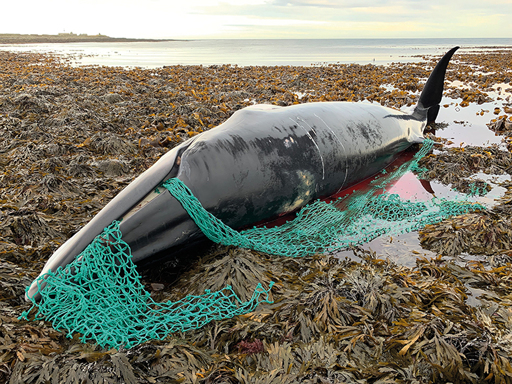
A minke whale, entangled in fishing gear, found dead on a beach on Sanday in Orkney A minke whale, entangled in fishing gear, found dead on a beach on Sanday in Orkney. Image: Emma Neave-Webb/Scottish Marine Animal Strandings Scheme Mark Rowe investigates the surge in whale strandings along Scotland’s coast — a warning sign, scientists say, of deeper changes in the North Atlantic ecosystem
A sighting of a pilot whale along the shoreline of Orkney should be a source of joy and wonder at the beauty of the natural world. Yet the two lone pilot whales spotted in waters off the Orkney islands of Westray and North Ronaldsay in August this year appear to tell a darker tale.
The two cetaceans are believed to have been survivors from a pod of pilot whales, 23 of which were found washed up on Roo Beach, at the northern end of Sanday, another Orcadian island, that same month.
The mass stranding came at a grim time, near the anniversary of the death of 77 pilot whales at Tresness in the southeast of Sanday in July 2024. The two events are part of a bleak trend: a marked increase in cetacean strandings, not only in Orkney but all around Scotland’s coastline.