

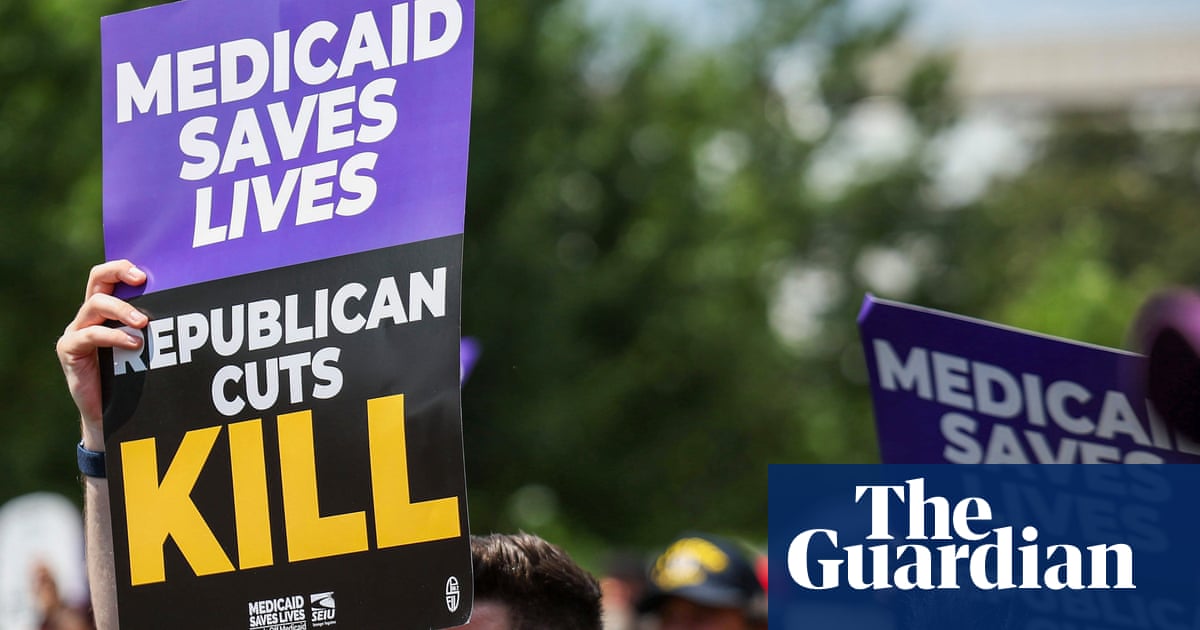
The bill, which will fully come into effect in the new year, will result in many adults covered through Medicaid having to meet new work requirements and being subject to more frequent eligibility checks, while there will be less federal funding for states for Medicaid.
60% isn’t referencing births it’s referencing total hospital income source. Baseline income for the whole building. This varies, of course, but the general numbers used are 60% rural, 30% urban. “Ish” on both.
As such, house wide cuts will be made to make up for the loss.
I was supplementing the article.
That is not what the article says, so I would be interested in knowing where you got that information.
Life knowledge is not summarized by an OP article. It’s why we all hop into the comments and do this discuss.online thing.
Because I enjoy discussing healthcare and think it’s important, I’ll add some easy sources.
Here’s a basic, with charts. More or less a healthcare data brokerage site. Here, the combined Medicare/Medicaid is listed at 44%, but it’s important to understand this is an average between both rural and urban hospitals. The number goes up in rural areas and down in urban areas, for reasons I already stated. TLDR, most surgeons and specialists don’t want to live in a tiny town with limited clientele numbers, and those are the MDs that bring in extra above and beyond money.
https://www.kff.org/health-costs/key-facts-about-hospitals/?entry=national-hospital-spending-spending-by-payer
Even so, consider, even at 44%, for arguments sake, cutting into 44% of anyone’s income is going to create an unpleasant reaction.
If you keep scrolling through those numbers, you’ll find the trend is already for hospital closures. 2010-2023 are their numbers. Cutting Medicaid and/or Medicare only speeds that up. And, naturally, the loss leader of medicine (birth centers) go first.
Now, if you click over to their rural data, you’ll find the over 60% reliance on Medicare and Medicaid number.
https://www.kff.org/health-costs/key-facts-about-hospitals?entry=rural-hospitals-rural-discharges-by-payer
Along with some rural hospital data.
Here’s a research article that discusses the underpaid / uncompensated problem.
https://pmc.ncbi.nlm.nih.gov/articles/PMC10924546/
Rural areas often can’t and don’t pay, or underpay. Bear in mind, every Medicaid payer in a birth center underpays because the benefit doesn’t cover the cost of giving birth.
It’s also important to remember that not all of your medical money goes to greedy CEOs. It pays for janitors, intake specialists, MDs, nurses, nurses aides, security (you want security in your hospital), scrub techs, respiratory therapists, phlebotomists, med techs running those labs, radiology, ultrasound, and a bunch of other stuff. A sizeable portion of those skilled people have incredible college debt to pay back to even be there. It’s not a charity, it can’t be when the skilled labor in the place relies on paychecks from it to live.
And here’s a general news style article if that’s more your thing.
https://rollingout.com/2026/09/07/6-facts-medicaid-cuts-hitting-hospitals/