This kind of stuff is added at the expense of optimisations though. The time spent adding support for real time ray tracing could have been spent making the game perform better overall for everyone.
This kind of stuff is added at the expense of optimisations though
You could apply this to a lot of other graphical options. Not bothering with antialiasing other than TAA that’s setup in a dogshit way could free up some time for optimization. It usually doesn’t.
The time spent adding support for RT is extremely low nowadays. e: That’s the whole selling point of lumen for example
And lumen is ass. TAA is ass. All this new technology chasing “realistic lighting” is complete ass because it trades off so much quality. It’s being pushed by NVIDIA because its the only reason they have to sell new GPUs.
Our hardware is ridiculously powerful, but it’s just not harnessed properly.
Lumen wouldn’t be so ass if it didn’t default to shit values. Same with TAA, it’ll still look shit in motion though. Devs seem allergic to exposing frame weights at the very least. Also Lumen is hardware-agnostic, if you’re not using it’s software mode it benefits all cards with the required hardware. Nvidia have their own thing going.
All this new technology chasing “realistic lighting” is complete ass
Hard disagree.
RT can be really nice, I loved it’s look in Control though I was using a patch that tripled the ray count which made it heavy as hell. But for an early RT implementation I can let this slide, especially bc it meshed so well with the art direction.
Also RTGI is amazing when implemented right, look at gta 5 for a good example, it sips power even with most other rt features enabled
edit:
It’s being pushed by NVIDIA because its the only reason they have to sell new GPUs.
Come on bruh. They could stop selling gaming gpus this second and barely notice. It’s one of the selling features but far from the only reason.
Exactly… games are quite often, in motion. I think we should abolish TAA and go back to forward rendering techniques with MSAA, the hardware can do it no problem. But a lot of games now are made with UE5s out of the box settings, which while they might be great for movies and VFX (I don’t know), they are absolutely terrible for games.
RTRT is probably the future yeah, once it’s matured to a point that it runs as aswell as traditional games, it’ll be great. Right now, it can’t and GPUs are more expensive with their “RT” cores.
For certain games it can work well like slower story games where you can immerse in the world, but for a lot of other games it’s a pointless loss of performance for details nobody will really notice.
But the devs get to slap “ray tracing” in the marketing and can take cash off Nvidia for RTX advertising. The “hype” around it has kind of died down anyway now.
Come on bruh. They could stop selling gaming gpus this second and barely notice. It’s one of the selling features but far from the only reason.
It was hyperbole, they sell them for AI now… aha. My point is that the latest, even last gens, GPUs are so so powerful, yet games seem to get worse and worse performing and in quality (I’m mostly talking big games here, ones you’d expect to built well, the ones chasing graphics). UE5 is normally the culprit.
But NVIDIA has clearly switched to selling software updates with their GPUs and marketing that. DLSS etc. I’m obviously talking about their gaming division here in isolation, it’s clear they don’t exactly need gaming sales to survive as a business now.
I’ve nothing against emerging tech, if it’s going to actually give us more performance. The fact new games still struggle to get 240fps on 1080p, raster performance, is insane. I honestly think 4K 120fps should be the baseline performance we should be hitting, raster, without any upscaling, frame gen bullshittery.


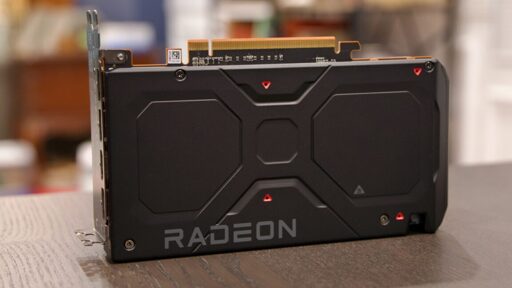
Thankfully games give you options. If you want crazy big textures and RT at 4K it’s your choice.
This kind of stuff is added at the expense of optimisations though. The time spent adding support for real time ray tracing could have been spent making the game perform better overall for everyone.
You could apply this to a lot of other graphical options. Not bothering with antialiasing other than TAA that’s setup in a dogshit way could free up some time for optimization. It usually doesn’t.
The time spent adding support for RT is extremely low nowadays. e: That’s the whole selling point of lumen for example
And lumen is ass. TAA is ass. All this new technology chasing “realistic lighting” is complete ass because it trades off so much quality. It’s being pushed by NVIDIA because its the only reason they have to sell new GPUs.
Our hardware is ridiculously powerful, but it’s just not harnessed properly.
Lumen wouldn’t be so ass if it didn’t default to shit values. Same with TAA, it’ll still look shit in motion though. Devs seem allergic to exposing frame weights at the very least. Also Lumen is hardware-agnostic, if you’re not using it’s software mode it benefits all cards with the required hardware. Nvidia have their own thing going.
Hard disagree.
RT can be really nice, I loved it’s look in Control though I was using a patch that tripled the ray count which made it heavy as hell. But for an early RT implementation I can let this slide, especially bc it meshed so well with the art direction.
Also RTGI is amazing when implemented right, look at gta 5 for a good example, it sips power even with most other rt features enabled
edit:
Come on bruh. They could stop selling gaming gpus this second and barely notice. It’s one of the selling features but far from the only reason.
Exactly… games are quite often, in motion. I think we should abolish TAA and go back to forward rendering techniques with MSAA, the hardware can do it no problem. But a lot of games now are made with UE5s out of the box settings, which while they might be great for movies and VFX (I don’t know), they are absolutely terrible for games.
RTRT is probably the future yeah, once it’s matured to a point that it runs as aswell as traditional games, it’ll be great. Right now, it can’t and GPUs are more expensive with their “RT” cores. For certain games it can work well like slower story games where you can immerse in the world, but for a lot of other games it’s a pointless loss of performance for details nobody will really notice. But the devs get to slap “ray tracing” in the marketing and can take cash off Nvidia for RTX advertising. The “hype” around it has kind of died down anyway now.
It was hyperbole, they sell them for AI now… aha. My point is that the latest, even last gens, GPUs are so so powerful, yet games seem to get worse and worse performing and in quality (I’m mostly talking big games here, ones you’d expect to built well, the ones chasing graphics). UE5 is normally the culprit. But NVIDIA has clearly switched to selling software updates with their GPUs and marketing that. DLSS etc. I’m obviously talking about their gaming division here in isolation, it’s clear they don’t exactly need gaming sales to survive as a business now.
I’ve nothing against emerging tech, if it’s going to actually give us more performance. The fact new games still struggle to get 240fps on 1080p, raster performance, is insane. I honestly think 4K 120fps should be the baseline performance we should be hitting, raster, without any upscaling, frame gen bullshittery.