I think the problem was rooted in public trust. Many people were required to vaccine due to their work or where they lived and vaccine manufacturers were largely sheltered from product lawsuits. Putting these two things together has a corrosive effect on public trust.
What injuries? Who has been denied a case here? The standard requiring documented negligence seems completely reasonable, these are highly studied and highly documented items.
If you ride an elevator and you get a headache, you can’t just sue the elevator manufacturer. That elevator was inspected at every step and was known to work, there is a very high bar for you to prove that the elevator caused the headache. Bringing lawyers in is a waste of everyone’s time and money. Vaccines, even the coronavirus vaccines, are 100x as safe as those elevators.
Americans are over-litigious and uneducated about medicine.
It’s not so much that Americans are uneducated… it’s more that a large portion have developed a resistance to being educated…one could perhaps say they’re vaccinated against knowledge.
Didn’t the earlier AstraZeneca vaccine eventually get pulled due to possible links to Acute Disseminated Encephalomyelitis? Ultimately, it doesn’t matter. A lot of people are going to be upset at having a mandate when recourse to justice if the vaccine goes wrong is pulled before the effects are fully studied.
As far as I can tell, that vaccine wasn’t pulled because it was unsafe, it was recommended against because there were other competing vaccines that were safer and more effective.
Its like how they don’t sell cars without backup cameras anymore. Its not like the cars were unsafe without backup cameras (actually all cars are unsafe), but in that rare chance (basically 0.0001% if we’re continuing the analogy), it can save a life by using a car with a camera.
I think people have a poor understanding of what the terms “fully studied” and “extremely rare side effects” mean. In colloquial speak, these vaccines were “fully studied”. For every person who had a vaccine “accident”, there were millions whose lives were saved by the vaccine.
People are willing to take huge risks for convenience (cars), but they’re unwilling to trade away huge risk in return for a microscopic risk (vaccines).


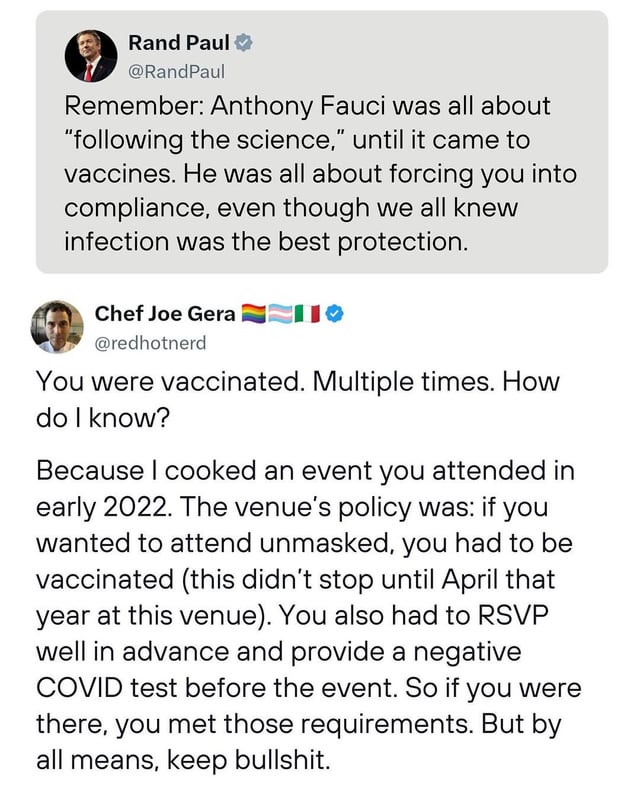
I think the problem was rooted in public trust. Many people were required to vaccine due to their work or where they lived and vaccine manufacturers were largely sheltered from product lawsuits. Putting these two things together has a corrosive effect on public trust.
https://www.nolo.com/legal-encyclopedia/can-i-sue-if-im-harmed-by-the-coronavirus-vaccine.html
What injuries? Who has been denied a case here? The standard requiring documented negligence seems completely reasonable, these are highly studied and highly documented items.
If you ride an elevator and you get a headache, you can’t just sue the elevator manufacturer. That elevator was inspected at every step and was known to work, there is a very high bar for you to prove that the elevator caused the headache. Bringing lawyers in is a waste of everyone’s time and money. Vaccines, even the coronavirus vaccines, are 100x as safe as those elevators.
Americans are over-litigious and uneducated about medicine.
It’s not so much that Americans are uneducated… it’s more that a large portion have developed a resistance to being educated…one could perhaps say they’re vaccinated against knowledge.
Didn’t the earlier AstraZeneca vaccine eventually get pulled due to possible links to Acute Disseminated Encephalomyelitis? Ultimately, it doesn’t matter. A lot of people are going to be upset at having a mandate when recourse to justice if the vaccine goes wrong is pulled before the effects are fully studied.
Yes it did. But that one was also a traditional vaccine, not an mRNA one that these idiots screamed conspiracy about.
They used that to throw doubt on all vaccines in general.
As far as I can tell, that vaccine wasn’t pulled because it was unsafe, it was recommended against because there were other competing vaccines that were safer and more effective.
Its like how they don’t sell cars without backup cameras anymore. Its not like the cars were unsafe without backup cameras (actually all cars are unsafe), but in that rare chance (basically 0.0001% if we’re continuing the analogy), it can save a life by using a car with a camera.
I think people have a poor understanding of what the terms “fully studied” and “extremely rare side effects” mean. In colloquial speak, these vaccines were “fully studied”. For every person who had a vaccine “accident”, there were millions whose lives were saved by the vaccine.
People are willing to take huge risks for convenience (cars), but they’re unwilling to trade away huge risk in return for a microscopic risk (vaccines).
trump politicized the hell out of it, thats where its coming from.
2 policies were anti science.
Requiring vaccines for people who had already recovered.
Removing (particularly mask) requirements for people who had been vaccinated.